
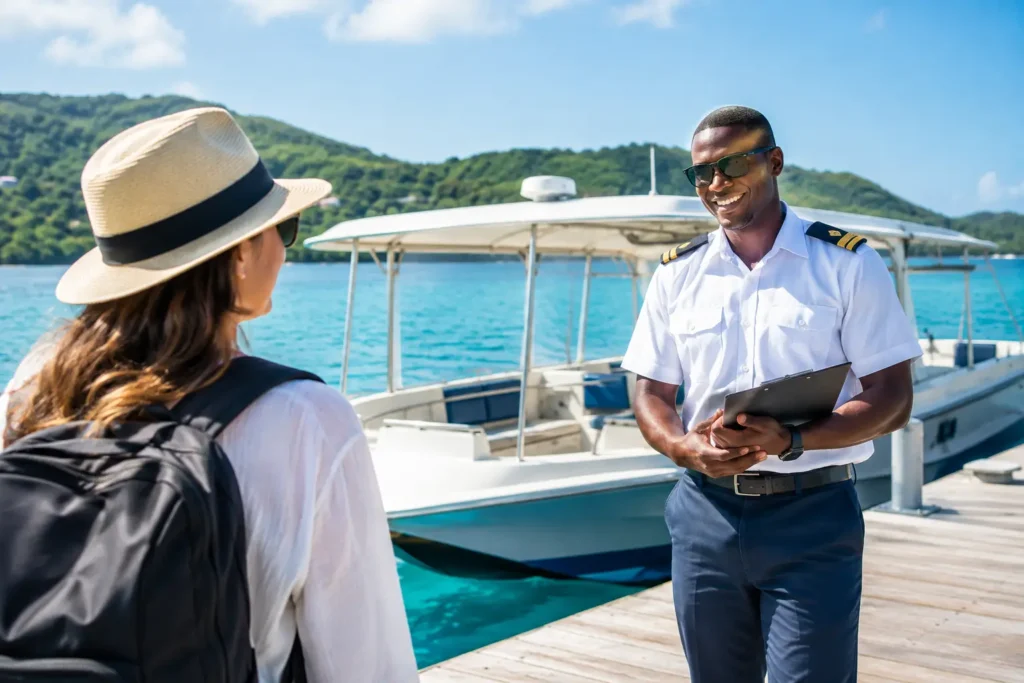
A private boat ride from St. Thomas or St. John to the British Virgin Islands should feel like the beginning of your vacation, not a paperwork puzzle. Understanding the BVI water taxi customs requirements before departure gives your group more confidence, protects your island time, and helps your captain plan a smooth route into the BVI.
Crossing from the U.S. Virgin Islands into the British Virgin Islands is an international journey, even when the turquoise Caribbean waters between islands make the trip feel wonderfully close. Every passenger must be cleared by BVI Immigration and Customs before heading off to the beach, villa, resort, or your first snorkel stop.
BVI Water Taxi Customs Requirements at a Glance
When traveling by private water taxi from the USVI to the BVI, passengers must arrive at an approved port of entry and complete immigration and customs clearance. Your captain will take care of the vessel procedures and guide you through the process, but each traveler is responsible for carrying the correct documents and answering any questions from border officials.
The exact process can vary with your nationality, the port you use, current border procedures, and the items you are bringing into the territory. That is why a little preparation matters. A private transfer removes ferry queues and complicated connections, but it does not bypass the official arrival process.
For most visitors, the key is simple: bring proper identification, allow time for clearance, and be ready to declare anything that needs to be declared.
Bring the right travel documents
A valid passport is the safest and most widely accepted document for international travel between the USVI and BVI. Travelers should make sure their passport has sufficient remaining validity for their trip. Many Caribbean destinations expect passports to be valid for at least six months beyond travel dates, so check your individual situation before you fly.
Depending on your citizenship, you may also need a visa or other advance travel authorization to enter the British Virgin Islands. U.S. citizens visiting for vacation generally do not need a visa for a short stay, but requirements can differ for travelers from other countries, for longer visits, or for specific travel purposes.
It is wise to keep these items together in a waterproof travel pouch rather than packed in checked luggage or buried at the bottom of a beach bag:
- A valid passport for every traveler, including children
- Any visa or entry document required for your nationality
- Proof of onward travel or return travel, if requested
- Your accommodation details, such as a villa, hotel, charter, or resort name
- Documentation for minors traveling with one parent, another relative, or friends when applicable
If you are unsure whether your paperwork is enough, confirm your requirements with the relevant government authorities before travel. This is especially helpful for families with different nationalities, visitors holding non-U.S. passports, or guests arriving on a cruise ship.
What Happens When You Arrive in the BVI
Your water taxi will first call at an authorized BVI entry point. You cannot arrive from the USVI and immediately continue to a private beach, snorkeling cove, restaurant, or villa dock. Immigration and customs clearance comes first.
Once the boat arrives, passengers normally disembark with their passports and belongings needed for inspection. An immigration officer will review your travel documents and may ask straightforward questions about the purpose of your visit, where you are staying, and how long you plan to remain in the BVI. After immigration, customs officers may ask about goods, food, alcohol, cash, equipment, or other items you are carrying.
Keep your answers clear and accurate. Most vacation arrivals are quick and uncomplicated when documents are in order and declarations are handled honestly. Your captain can explain where to go and when to return to the boat, allowing you to focus on the exciting part: your BVI adventure is about to begin.
Give customs enough time
A private water taxi is built around convenience, but clearance time still needs to be part of the schedule. Processing can be fast on a quiet morning and take longer when several boats, ferries, or flights arrive at once. Holiday weeks, weekends, changing weather, and staffing can all affect timing.
For cruise visitors, this point matters even more. A well-planned private excursion should account for the crossing, border formalities, your beach or snorkeling time, the return clearance into the USVI, and a comfortable buffer before all-aboard time. Do not plan a border crossing so tightly that one busy customs line puts your day under pressure.
I & I Boat Charters can help guests shape a private itinerary around realistic transfer and return times, so there is room to enjoy the pristine white-sand beaches instead of watching the clock.
Declaring Food, Drinks, and Personal Items
Customs requirements are not only about passports. Travelers must declare goods when required, including items that may be restricted or subject to duty. Rules can change, so avoid assuming that something permitted at home will automatically be permitted in the BVI.
Fresh produce, meat, plants, seeds, and certain agricultural products can receive extra attention because islands work hard to protect their environment. If you are packing groceries for a villa stay, consider buying what you need after arrival or check the current rules first. Bringing a few sealed personal snacks is different from transporting a large grocery haul, but honest declaration remains the best approach.
Alcohol and tobacco may have allowances or duties depending on quantity and the nature of your visit. Prescription medications should stay in their original labeled containers. If you are traveling with specialized medical equipment, valuable camera gear, professional equipment, fishing gear, or items intended for sale, allow extra time and bring supporting paperwork where appropriate.
Carrying a large amount of cash also comes with reporting obligations. Do not try to guess your way through this. Tell the officer what you have and follow the instructions provided.
Traveling with children, pets, or special gear
Families are always welcome on the water, but children need their own valid travel documents. If a child is not traveling with both parents or legal guardians, carry any consent letter or custody documentation that may be relevant. Officials may not request it every time, but having it available can prevent unnecessary delays.
Traveling with a pet requires advance planning. Pets may need import permits, health certificates, vaccination records, and other approvals before entering the BVI. Do not expect a pet to be cleared as casually as a beach bag. Confirm pet-entry procedures well before your vacation and tell your water-taxi provider in advance.
Divers, photographers, anglers, and guests bringing larger equipment should let the charter operator know before departure. Space, safety, customs questions, and the best transfer timing can all depend on what comes aboard.
Remember the Return Trip to the USVI
Your customs planning does not end when you arrive in Tortola, Jost Van Dyke, or another BVI destination. Returning to St. Thomas or St. John means re-entering the United States, and all passengers must complete the appropriate U.S. Customs and Border Protection process at an authorized USVI port of entry.
Keep your passport accessible throughout the trip, not tucked away with wet swimsuits and sunscreen. You may be asked about purchases, alcohol, tobacco, food, or other items acquired in the BVI. Declare your purchases accurately and be aware that U.S. allowance rules and restrictions apply.
This return clearance is another reason private planning makes a difference. A relaxed charter day leaves enough room for one last swim in clear Caribbean water, then gets you back to the proper port with time for formalities and, for cruise guests, a comfortable return to the ship.
A Few Smart Steps Before Departure
The best water-taxi transfers begin before you step onto the dock. Check your passport expiration date early, confirm whether every member of your group needs a visa, and share your accommodation and travel details with your charter provider. Pack documents separately from luggage, and ask questions about anything unusual you plan to bring across the border.
Most importantly, build a little flexibility into your day. The BVI is made for beach stops, family laughter, and finding Nature’s Little Secrets between the islands. When customs details are handled ahead of time, you are free to step aboard, feel the trade winds, and let the vacation begin.